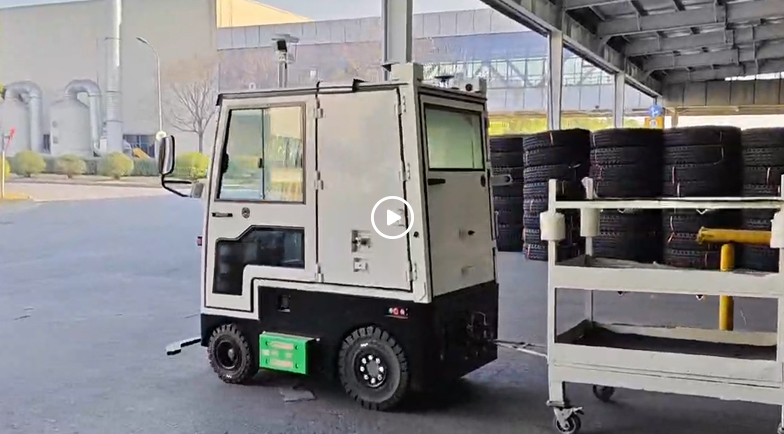
Unmanned logistics within the factory complex
All-Scenario Navigation Capability · Interactive Demo

Site

- Manual material loading/unloading
- Manual or automatic hook detachment
- Detection of surrounding obstacles upon startup
- Slow-speed operation (5 km/h)

Change lanes

- Slow-speed driving (5 km/h)
- Detection of obstacles to the side

Straight

- Driving at normal speed (≤25 km/h)
- Detecting obstacles in the vehicle's path

Vehicle-Road-Cloud Collaboration

- Road section management model, currently in trial operation

Intersection

- Detects obstacles within a specified range
- Predicts object movement trends
- Enables intelligent, rapid passage

Scheduling

- Receive dispatch instructions to pull over and yield
- Receive dispatch instructions to resume driving

Smart Intersection Convergence

- Overcomes the limitation of allowing only one vehicle to pass at a time

Pedestrian area

- Detects obstacles on the sidewalk
- Enables smart, rapid passage

Indoor traffic

- Low-speed operation (5 km/h)
- Straight-line travel, turning, and U-turns
- Rapid indoor startup
- Enhanced adaptability to complex environments, such as settings with repetitive structural features or highly variable conditions

HMI

- HMI: User-friendly human-machine interface
- Interaction design, path recording
- and online programming

Ramp (≤12km/h)

- Power output adjusts dynamically based on the slope when going uphill
- Motor-based deceleration (supplementing the braking system) when going downhill

Startup

- Rapid start at fixed point
- Start on the line

Charging/Battery Swapping

- Automatic scheduling

Cross-Line Scheduling and Global Path Planning

Enables vehicle resource sharing

Obstacles

- Breakthrough minimum detection blind zone of ≤30 cm
- Minimum detectable obstacle height of ≤15 cm
- Enables obstacle-avoidance navigation

Product Portfolio

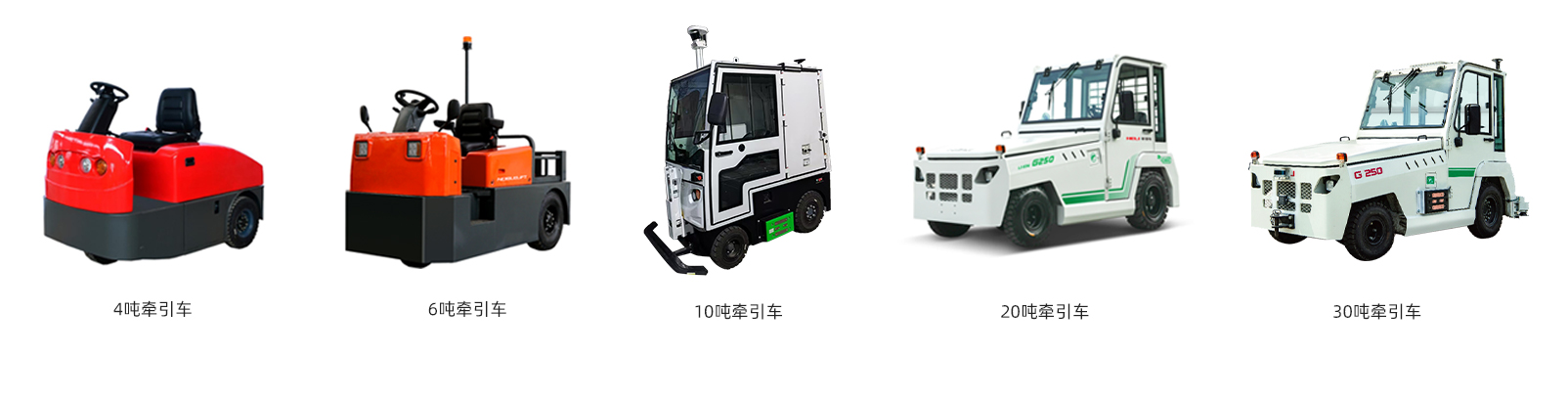
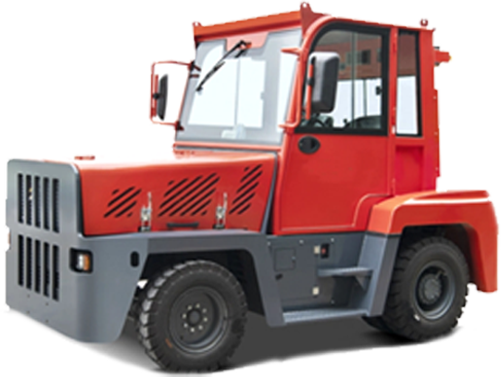
Towing-type logistics robot

Towing-type logistics robot

Key Functions

Long-distance towing and transport,
Autonomous navigation in enclosed environments

Application Scenarios

Raw material transfer between factory workshops,
Cargo towing in logistics parks
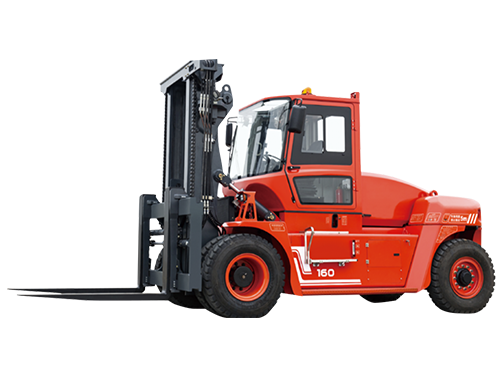
Embodied AI Forklift-style Logistics Robot

Embodied AI Forklift-style Logistics Robot

Key Features

Intelligent loading and unloading,
High-level stacking,
Precision positioning

Application Scenarios

Warehouse cargo stacking,
Logistics center loading and unloading operations

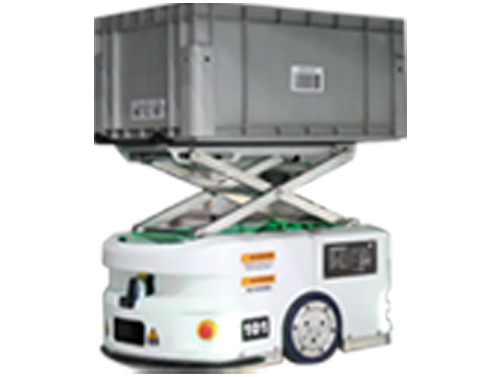
AGV/AMR Lifting-Type Logistics Robot

AGV/AMR Lifting-Type Logistics Robot

Key Features

Automatic lifting and transport,
Flexible path planning

Application Scenarios

Material transfer on workshop production lines,
Loading and unloading of warehouse goods

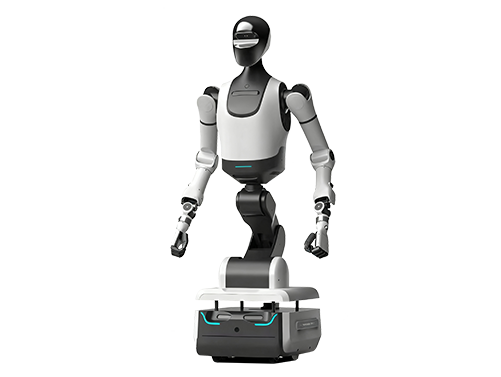
Dual-arm mobile logistics robot with embodied intelligence

Dual-arm mobile logistics robot with embodied intelligence

Core Functions

Collaborative multi-tasking (handling, grasping, and assembly),
Human-robot collaboration

Application Scenarios

Precision manufacturing and assembly,
Complex material sorting

R&D Iteration and Future Planning

R&D and Promotion of Towing-Type Logistics Robots

R&D and Promotion of Towing-Type Logistics Robots

Six surround-view cameras and BEV+OCC algorithms have been added, integrating LiDAR data to provide full vehicle coverage and eliminate blind spots.

The position of the hook is detected and identified using tags on the visual sensor mounting ring; subsequently, through path planning and targeting, the vehicle is guided to move along the planned path to automatically complete the hooking operation.

Identify the location of available charging stations using visual sensor detection or positioning solutions to enable automatic vehicle charging.

When the vehicle encounters a malfunction and reports the fault information, the monitoring center can conduct remote 3D surround-view video monitoring of the unmanned logistics robot.

OTA updates and out-of-the-box readiness.

Replace the H16 with a solid-state LiDAR (such as the E1R); replace units like the INS570D.

The perception module implements dual-modal fusion perception using a forward-facing E1 solid-state LiDAR and a front-view camera, significantly improving 3D object detection metrics.

Local Planning — Stage 1: Perform rule-based obstacle avoidance and maneuvering around obstacles when conditions permit; Stage 2: Navigate through efficiently.

Following the architectural adjustment, it is adaptable to various platforms, and resource consumption is significantly reduced.

Port the Tianzhun Orin solution to other platforms (such as the RK3588) as a cost-effective alternative.

Deploy large-scale decision-making models to make vehicles more intelligent, enabling them to flexibly handle various unknown scenarios.

Forklift logistics robots

Forklift logistics robots

Built using large language models, the system supports the issuance of instructions and tasks via natural human language.

Enables precise identification and fork-handling of non-standard load carriers. Utilizing 3D sensors, the system performs cargo, pallet slot, and target area detection, while supporting control functions such as automatic pallet slot alignment and dynamic alignment with the target area.

Supports OTA updates.

Based on multi-sensor fusion perception combining vision and LiDAR, the system is capable of detecting, tracking, and predicting the trajectories of obstacles along the planned route, as well as identifying traversable areas in the vicinity; it supports navigation, obstacle avoidance, and obstacle bypassing along the planned route.

Unmanned forklifts can perform mapping and route data collection in remote-control driving mode.

Supports high-precision positioning with an accuracy of within 2 cm.

The decision-making module can execute standard task planning and also supports an architecture that integrates Large Language Models for task planning.

Real-world application cases

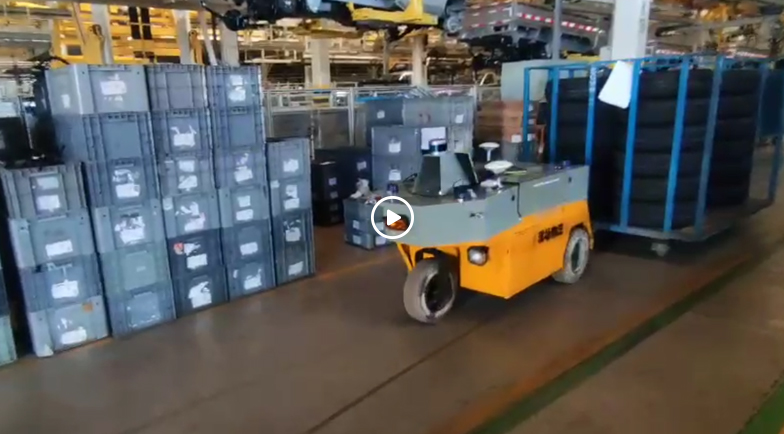
SAIC-GM-Wuling Component Transfer
XCMG Automotive Unmanned Operation Adaptation

Forging ahead together on a new journey of intelligent driving.

<Top